Made and hosted in the European Union
Monitor websites and APIs
from anywhere, every 30 seconds.
Track uptime across websites, servers, and APIs in real time, and monitor SSL certificates. Get alerted instantly when something goes wrong.

Trusted by 1,000+ teams that ship websites and APIs every day








Reliable website uptime monitoring
Ensuring you’re the first to know when things go sideways. Whether it’s a sluggish response time or a misbehaving SSL certificate.
-
Watch over websites and APIs
From HTTP(S) endpoints to TCP sockets and ICMP ping checks, if it talks, Phare can listen.
See monitor types -
Monitor globally
Choose from 12 locations in Europe, America, Asia, and Oceania, that run monitoring checks at the edge without proxies.
See all regions -
Set custom headers
Add custom headers to monitoring requests to bypass firewalls or check APIs behind an authentication layer, encrypted when they hold a secret.
See custom headers -
Choose the sensibility cursor
Double (or triple) check an incident before sounding the alarms to reduce false positives. Same for recoveries.
See confirmations -
Allocate the right resources
Choose your monitoring interval, anywhere from micromanaging every 30s to a more chill hourly check.
See monitoring intervals -
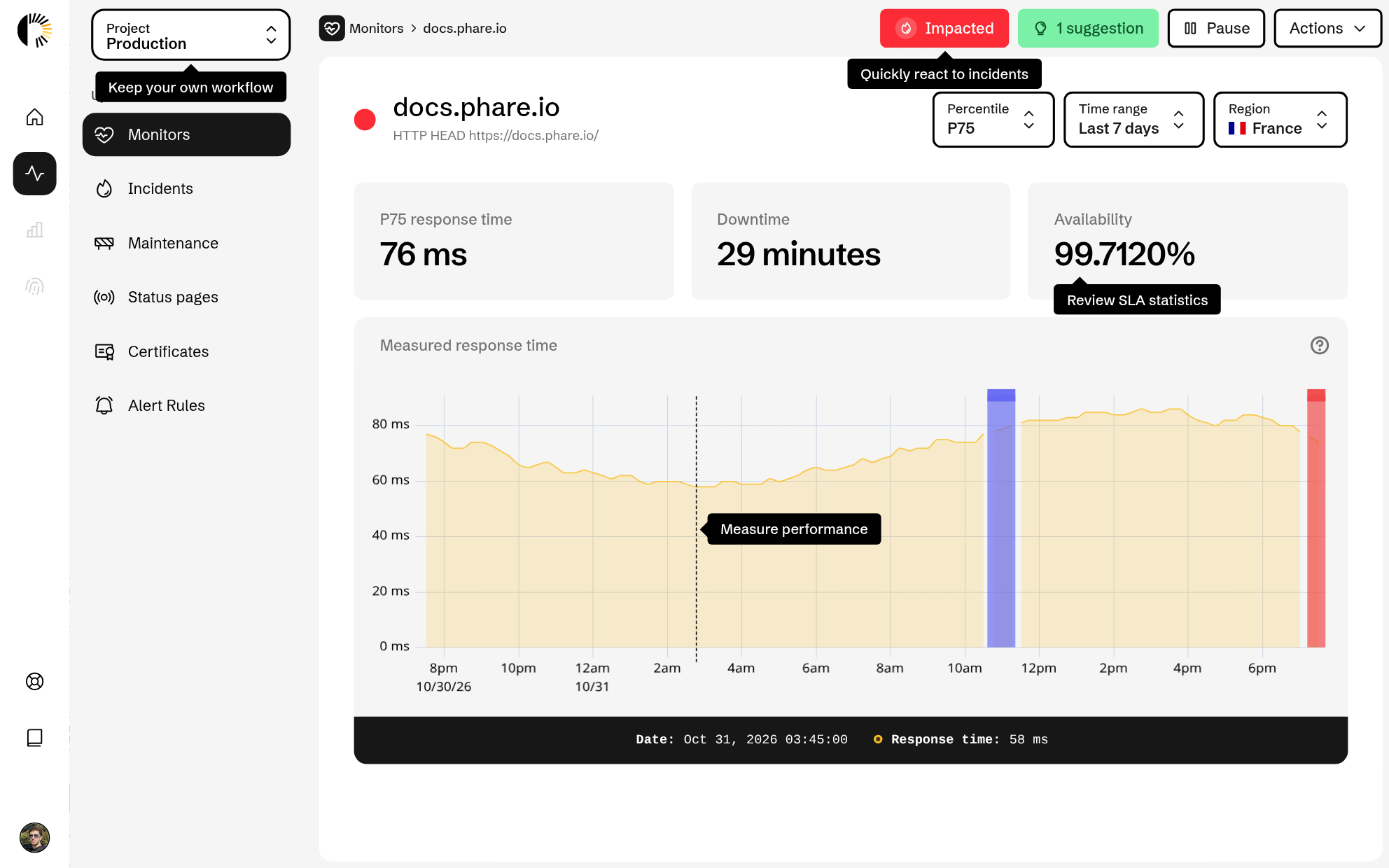
Nerd out on the stats
Report on uptime percentages, response times, SLA targets, all sliced by region and tracked for up to 90 days.
See statistics -
Manage certificates
Certificates are automatically discovered and monitored, you can get alerted when they are about to expire, or when a new one is issued.
See certificate monitoring -
Stop overthinking
Not sure what settings to choose for your monitor? Keep the default values and get smart suggestions if anything can be improved.
See suggestions -
Decide success conditions
Create sets of advanced conditions to determine when a monitor should be considered as successful or failed.
See success assertions
“Phare is really easy to set up and has been a part of our technological stack for a few years. The product already offers a lot, and is updated frequently with new features.”
Lucas Moisan, Tech Lead & Co-Founder, Wizards Technologies
- Industry
- IT Services
- Team size
- 50–100

Multi-player incident management
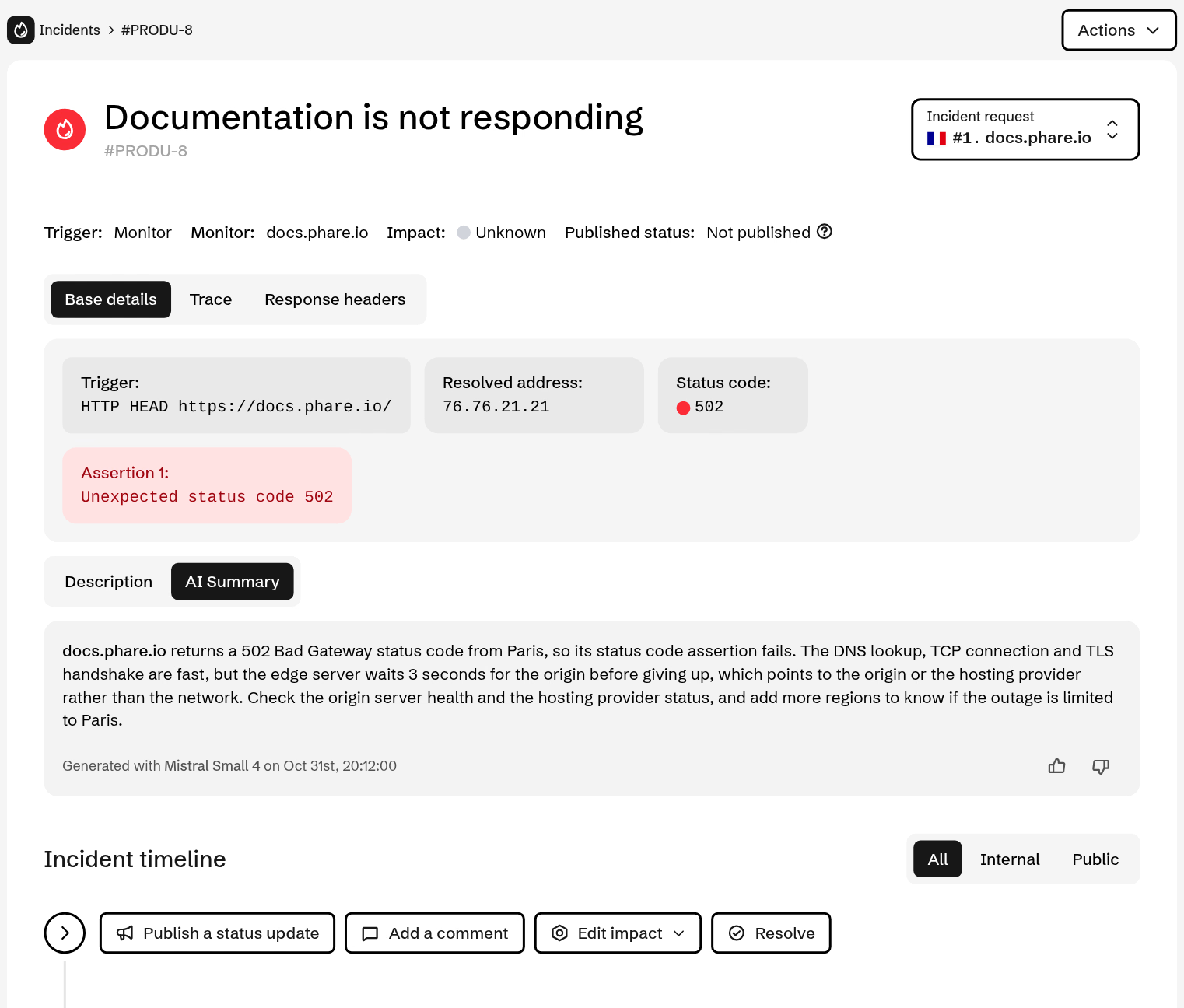
Create, track, and communicate incidents with your team and customers.

-
Get automatic incident detection for a wide range of issues with AI summaries and postmortems.
See incident detection -
Add comments for your pals, and publish incident updates to keep your customers in the loop.
See incident updates -
Keep things tidy with an extensive event timeline of all events, updates, and comments.
See the timeline
Conversational status pages
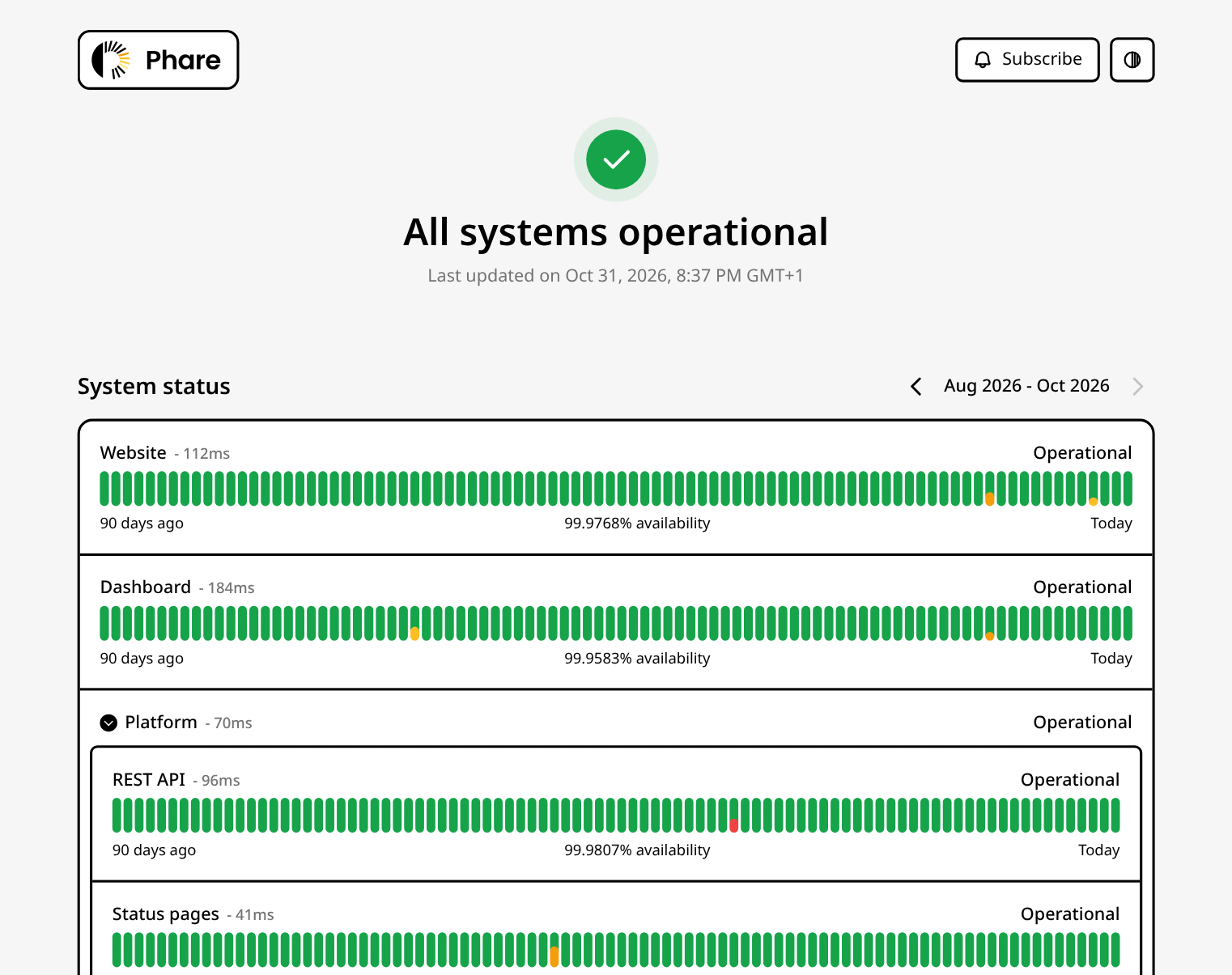
Tell your users what’s up, or down, with branded outage updates.

-
Create a branded status page that runs on your own domain, or one provided by Phare.
See custom domains -
Control access to your status page by IP address, token, or password.
See private status pages -
Let users subscribe to real-time updates via RSS, Atom, and Slack subscriptions.
See subscriptions -
Be nice to the planet with the most eco-friendly status page, rated with an A+ perfect score.
See the score
Scheduled maintenance windows
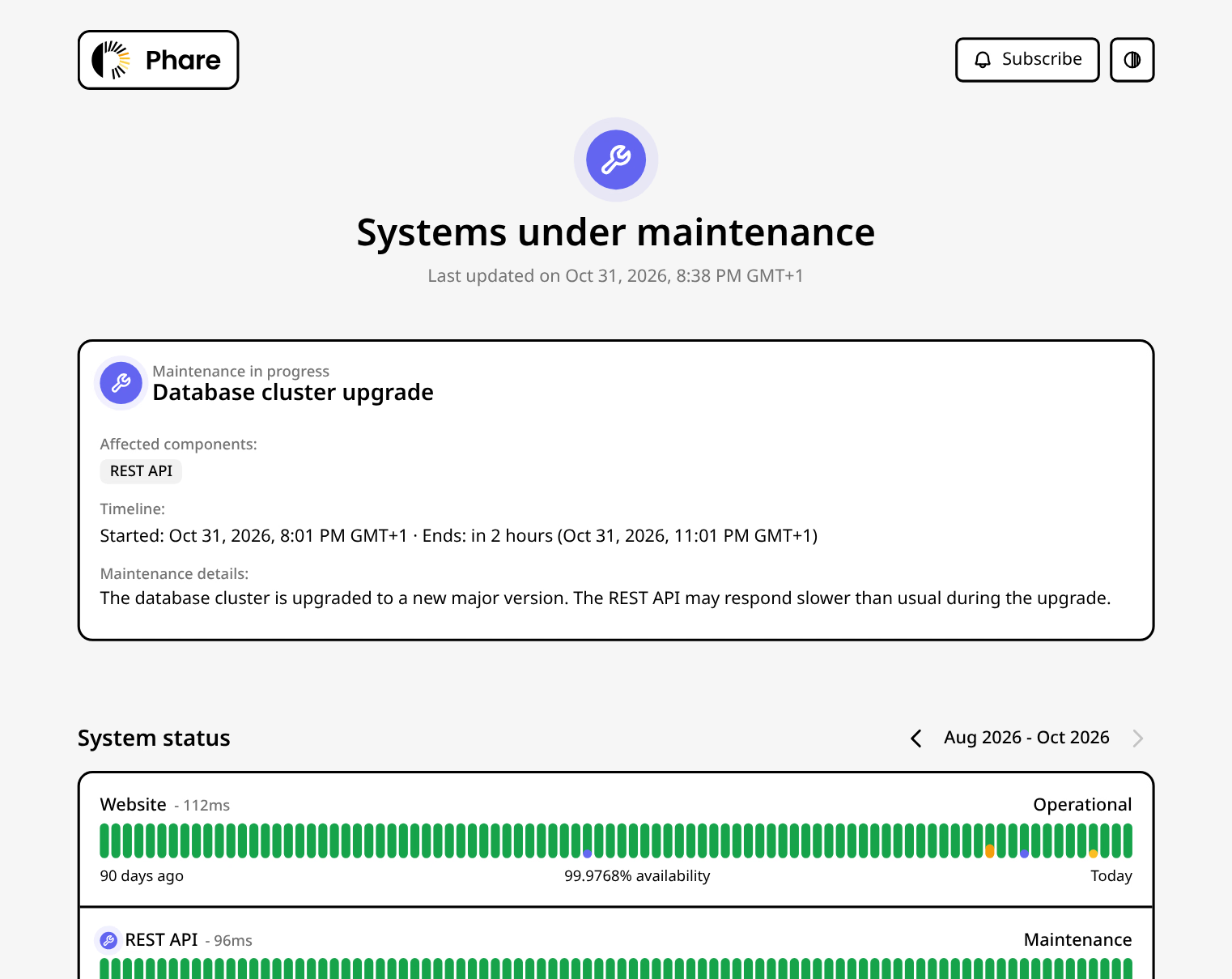
Silence the alarms, keep your SLA clean, and notify your customers before planned downtime begins.

-
Pause checks or mute notifications so your team can deploy without alert fatigue.
See maintenance options -
Broadcast scheduled maintenance directly onto your public or private status pages.
See an example -
Keep your SLA metrics accurate by excluding planned maintenance from downtime reports.
See SLA reports
Alerting that delivers
No more alert spam. Just smart, flexible notifications. Get the right alerts, to the right place, at the right time.

-
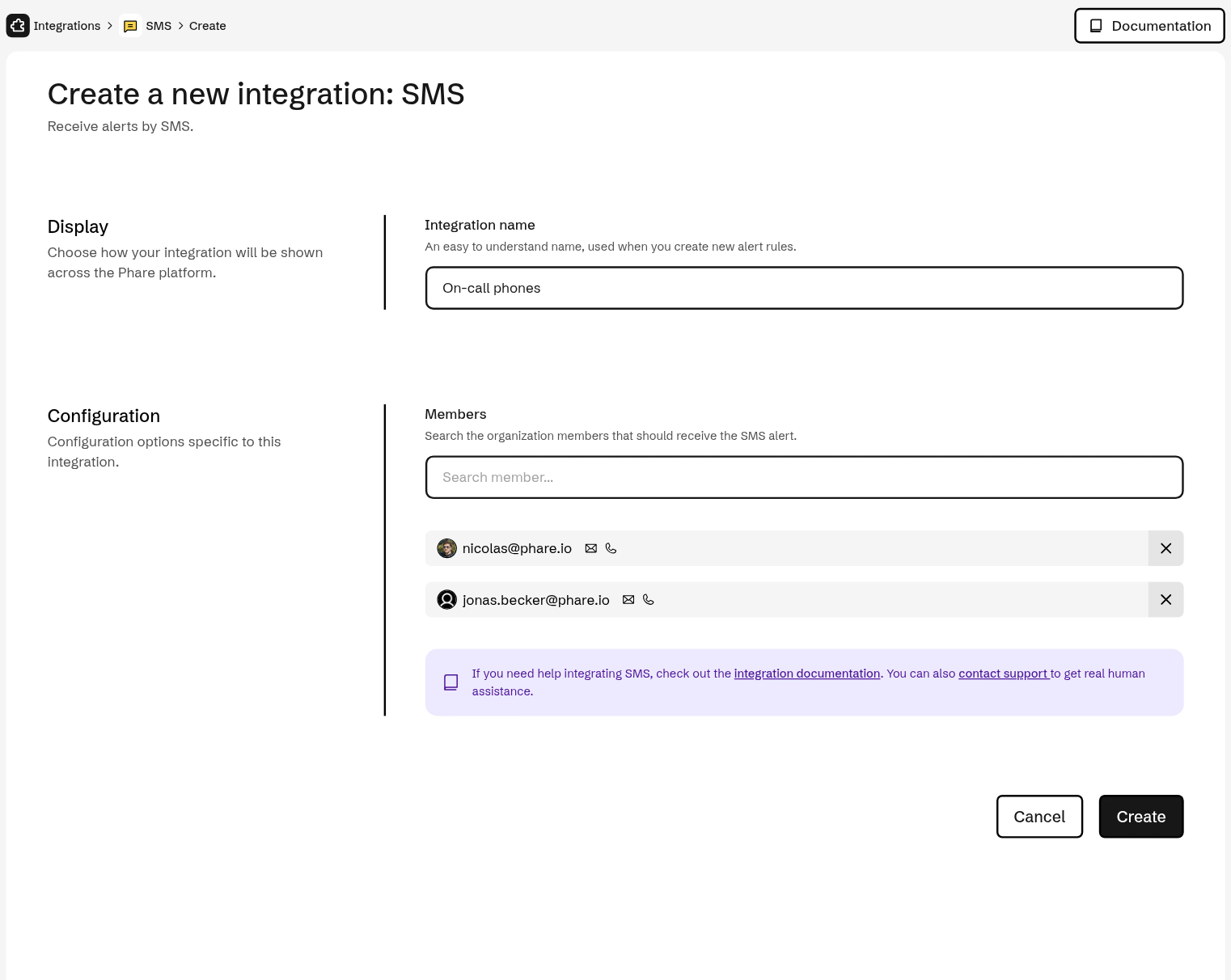
Get alerted on multiple channels, ensuring team members get notified on their favorite app.
See all integrations -
Granularly choose which events are relevant for you and where to send them.
See alert rules -
Rate limit notifications to reduce spam and avoid alert fatigue.
See rate limiting -
Get notified with an aggressive retry policy on all notification channels to ensure delivery during outages.
See notification channels
“Phare provides a nice and clean UI, actually the best that I have seen for a monitoring tool so far. But you got many more features, like a status page with custom domain, own alert rules and alerting from different regions.”
Adriaan Wind, CTO & Co-Founder, Anny
- Industry
- Software as a Service
- Team size
- 10–50

Frequently asked questions
You could not find the answer to your question? Ask support.

-
How frequently does Phare monitor my website?
You can configure Phare to check your website or API as frequently as every 30 seconds. This high-frequency uptime monitoring ensures you’re notified almost instantly when downtime occurs.
-
Can I monitor APIs that require authentication?
Yes. You can configure custom headers for your monitoring requests, allowing you to pass Bearer tokens, API keys, or basic auth headers to monitor private endpoints and internal webhooks securely. Header values holding a secret can be encrypted, so they are never shown again once saved.
-
Can I monitor internal or private infrastructure?
Phare uses shared IP addresses rather than dedicated static IPs, but you can securely monitor private or protected infrastructure. Phare implements the Web Bot Auth standard (cryptographic HTTP message signatures) and allows you to append secret verification tokens to your monitor’s User-Agent or custom request headers, enabling your firewalls, WAFs, or reverse proxies to safely allow monitoring checks.
-
Can I monitor TCP services?
Yes. In addition to HTTP and HTTPS endpoints, Phare can connect directly to arbitrary TCP ports to monitor databases, mail servers, Redis instances, and other custom network services.
-
Can I monitor servers with ICMP ping?
Yes. Alongside HTTP and TCP monitoring, Phare offers ICMP ping monitoring to check whether your servers respond to ping requests. Enter a hostname or IP address, track availability and response times, and get alerted when a host stops responding.
-
What are success assertions?
Success assertions allow you to define advanced conditions to determine if a check is successful or failed. For example, you can assert that the response body contains specific text, expected headers match, or that the response status matches the pattern 2xx.
-
How do you prevent false positive alerts?
Nobody likes waking up for a one-time network hiccup. Phare allows you to configure confirmation settings to require multiple consecutive failures, or failures from multiple monitoring regions, before an incident is created and alerts are triggered.
-
Is SSL certificate monitoring included?
Yes, SSL/TLS certificate monitoring is included out of the box. Phare tracks expiration dates automatically and alerts you before they run out, helping you avoid security warnings for your users.
Phare would have checked your website once by now.
How many times have you checked it in the last 0 seconds?
Start monitoring for free